

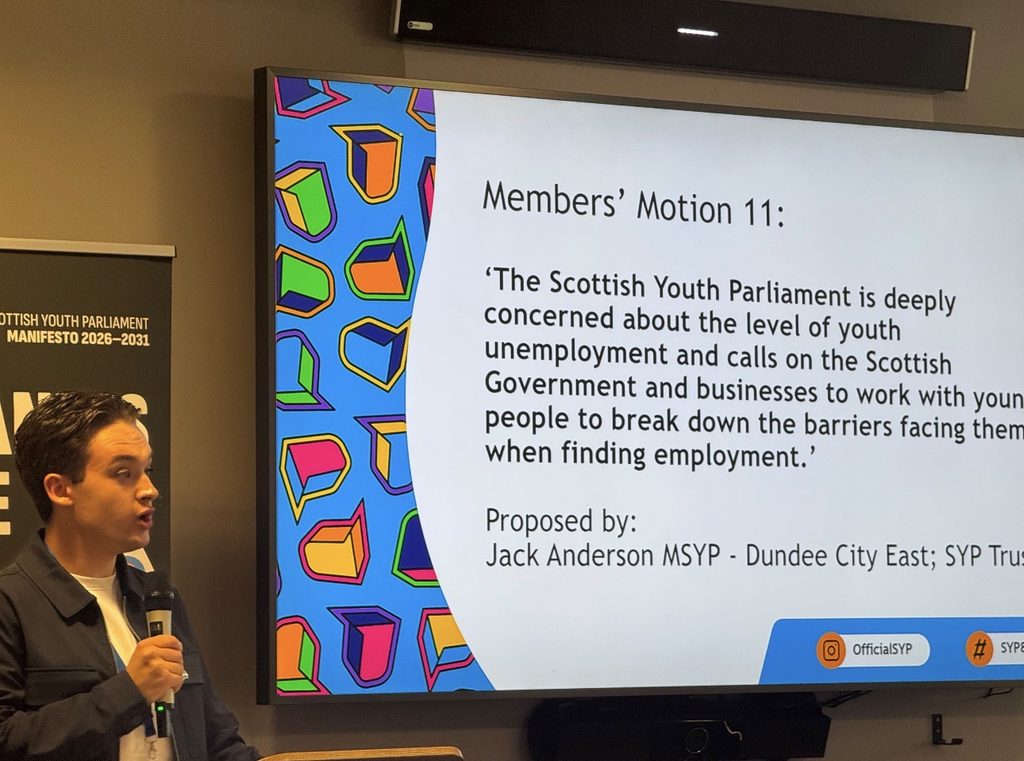
For young people, the first steps into work are often the first steps into adult life. Work gives young people greater independence, skills and self-respect.
However, it is becoming harder for young people to get a job. Young people are applying to tens or hundreds of jobs and regularly getting rejections or hearing nothing back from employers at all.
Alan Milburn is a former Health Secretary. He was asked to carry out a government review into young people and work. In June, he published his interim report.
Here are five things you need to know from it.
1. Young unemployment is rising
There were 739,000 unemployed 16-to-24-year-olds in the UK between April and June 2026.
That means the youth unemployment rate was 16.2% – more than three times the overall unemployment rate of 4.9%. The youth unemployment rate has increased from 14.3% a year earlier.
For young people trying to get their first job, a difficult labour market can mean more competition for entry-level positions and fewer opportunities to gain valuable experience.
2. More than one million young people are NEET
In the first three months of 2026, 1.01 million 16 to 24-year-olds were not in education, employment or training (known as NEET). That represents 1 in 8 young people in this age group.
Being NEET does not necessarily mean being unemployed. Some young people are actively looking for work, while others are economically inactive and not currently looking for a job.
The figure therefore highlights a wider problem than unemployment alone: how young people are becoming disconnected from both education and the labour market.
Without significant action, the number of young people who are NEET could rise to 1.25 million by the early 2030s. That would represent a substantial increase and could mean around 1 in 6 young people being outside education and employment.
3. A growing number of young people have never had a job
The review suggests that around six in 10 young people who are NEET have never had a job. That has significantly risen from around four in 10 two decades ago.
Milburn argues that this points to a fundamental change in the way young people enter the labour market. Traditional routes into work, including Saturday jobs and other entry-level positions, have become less common, making it harder for some young people to get that crucial first experience of employment.
4. Inactivity due to illness or disability has more than doubled
Health has become an increasingly important factor in youth economic inactivity. The proportion of NEET young people who are economically inactive because of sickness or disability increased from 11% in 2005 to 28% in 2025.
The review also found that among disabled young people who are NEET, the proportion identifying mental health as their main health problem rose from 24% in 2011 to 42% in 2025.
This suggests that tackling youth unemployment cannot simply be about creating more jobs. For many young people, particularly those experiencing health problems or disabilities, the barriers to employment can begin much earlier and require support across health, education and employment services.
5. The cost of youth unemployment is huge
The impact of a young person being NEET is felt over their lifetime. The review estimates that a 24-year-old who is NEET can lose up to £300,000 in lifetime earnings, even if they subsequently return to the labour market.
However, the consequences of young people being out of education, employment or training extend far beyond the individual.
Alan Milburn’s review estimates that the cumulative annual cost of almost one million NEET young people is £125 billion. This includes the impact on public finances, lost tax revenues, benefit spending and wider social and economic costs.
Getting young people into education, training or employment earlier therefore can improve individual life chances while also strengthening the economy and reducing pressure on public finances.
What do the numbers tell us?
Taken together, these statistics suggest that the UK’s youth unemployment problem is about more than unemployment.
739,000 young people are unemployed. More than one million are NEET. And six in 10 NEET young people have never had a job.
Milburn’s review suggests that the problem is becoming increasingly structural, with changes in the labour market combining with issues around education, health and access to support.
The warning is clear: without action, today’s youth employment problems could become tomorrow’s long-term economic and social problems.
What can be done?
The challenge now is to make sure young people have genuine routes into work – and that getting your first job does not become harder simply because you are starting your career at the wrong time. Meaningful progress will require action and cooperation from all parts of society.
We need schools to better prepare young people with the skills they need for work, particularly as AI and technology develop.
We need colleges and universities to work more closely with businesses to identify local and national skill shortages to then develop the workforce of the future.
We need the government to make hiring young people more attractive by offering employers who do greater incentives and support.
We need employers to improve the hiring process by providing responses and feedback to young people to improve their resilience after receiving rejections.
However, schools, businesses and the government need to listen to young people and make sure they have a meaningful role in shaping the future of work. Young people are not just the future of the workforce – they are the workforce of the future, and we cannot afford to leave them behind.