In Angus, more than 80% of menstruating young people never or rarely use the period products their school provides. In Aberdeenshire, only 33% of young people say their school provides enough period products for pupils. Why is access to period products in schools so inconsistent?
We asked pupils across Angus and Aberdeenshire, and four themes quickly emerged: social stigma, restricted access to bathrooms, a lack of available products, and schools not taking responsibility for tackling the issue. So why do young people experience such different levels of access depending on the school they attend?
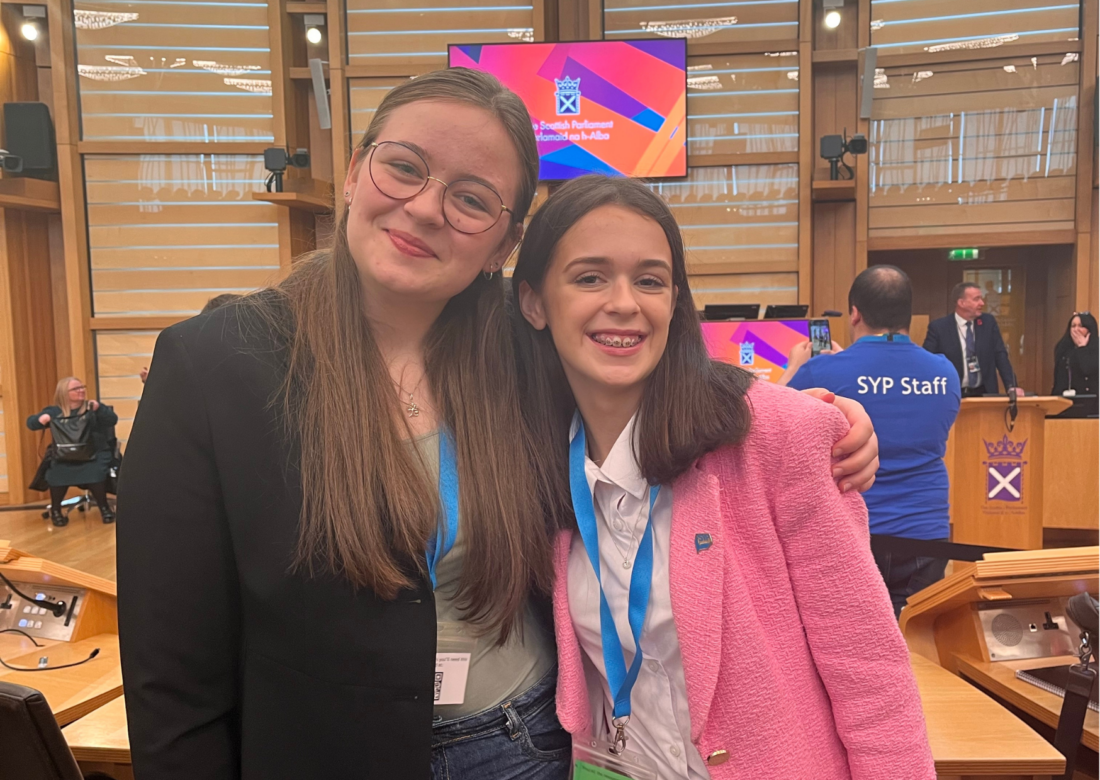
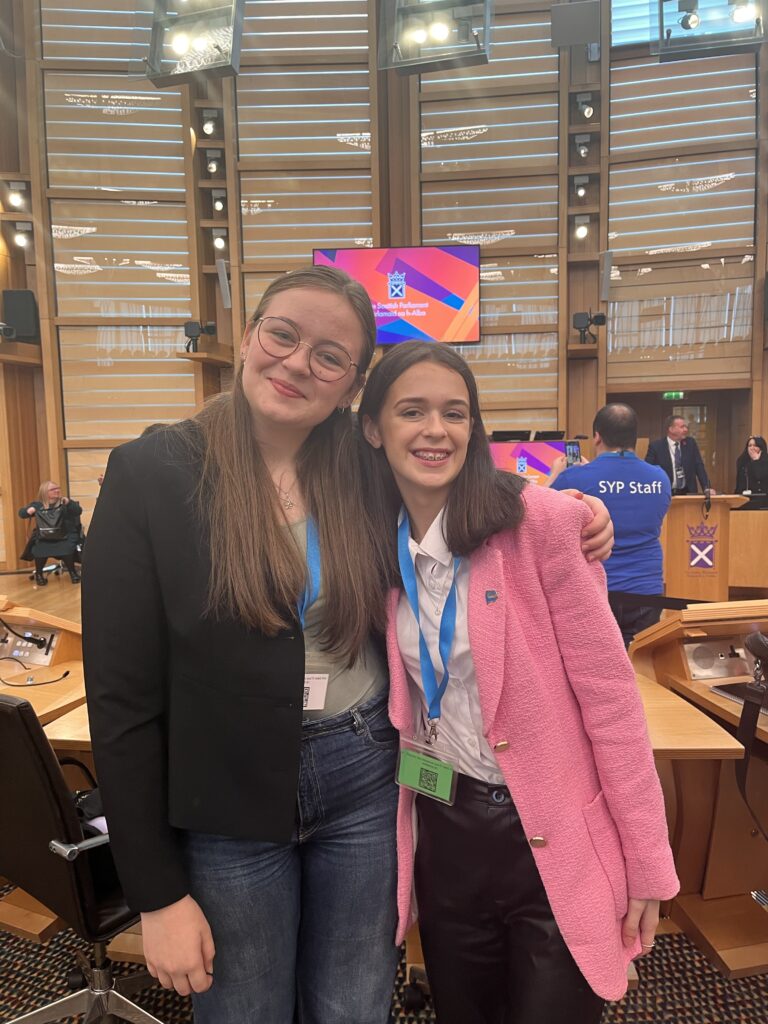
Back in September 2024, Ella Quinn, MSYP for Angus South, and I, MSYP for Angus North & Mearns, launched our Providing Access, Dismantling Stigma (PADS) campaign. Since then, we have written a report, run a photo campaign and met with numerous politicians. Whenever we raise the topic of periods with decision-makers, you can sometimes feel the room stiffen. Creating change on this issue is difficult, especially when stigma surrounding menstruation remains so strong among the people responsible for shaping policy.
So why is it that, if nobody wants to talk about periods, we have had one of the most interactive and engaging campaigns of this SYP membership? We have seen huge engagement on social media, received hundreds of survey responses and heard countless young people willingly share their stories with us. Perhaps it’s not what we’re talking about, but who we’re talking to.
Although the Period Products (Free Provision) (Scotland) Act 2021 made period products freely available, period stigma remains widespread. Young people have described the embarrassment of having to tell an entire class they are on their period simply to be allowed to use the bathroom. We have also repeatedly heard about period products being removed from bathrooms because of concerns about “vandalism”, with products being kept under “lock and key”.
Many of the politicians shaping these policies have never had to experience what they are legislating on. Many have never experienced enduring menstrual cramps through seven hours of school followed by four hours at work. They have never worried about leaking through a school uniform or calculated whether they have enough money to buy pads. Young people who menstruate were never properly consulted on legislation that affects them so deeply, and the consequences are becoming increasingly clear.
To produce our PADS report, we received more than 500 responses from young people attending secondary schools across Angus and Aberdeenshire, as well as students in other education settings, including Dundee and Angus College. One young person told us:
Sometimes the products don’t get restocked in the bathrooms, so people are too nervous to take one in front of others (especially as in school, kids go to the bathroom in gangs) and a lot of teachers don’t let you use the toilets…
They also explained that:
You wouldn’t be able to find them [period products] yourself, you’d need to find a member of staff to help you.
Too often, period products are treated as a luxury. You know you’re in a high-end hotel when there’s a box of tampons sitting next to the sink. Yet we continue to treat essential hygiene as optional. We would never treat toilet paper like this. We would never carry toilet paper around in public. We would never feel anxious about where we can next get toilet paper. So why is this normal for period products?
PolicyWISE reports that 25% of Scottish university students experience period poverty. That’s one in four young people living without reliable access to essential hygiene products, something young people who do not menstruate rarely have to think about. This is not simply an inconvenience or a few pounds every month. It reflects inequalities that continue to disproportionately affect those who menstruate.
But don’t we already have free period products in Scotland?
The Period Products (Free Provision) (Scotland) Act 2021 was groundbreaking. Scotland became the first country in the world to make period products freely available by law. So why are so many young people still struggling every month?
The issue isn’t the legislation. Through Ella’s work with Angus Council, it quickly became clear that funding wasn’t the primary challenge. The issue is responsibility. Local authorities are responsible for ordering products, but schools are not always taking responsibility for ensuring they remain stocked or creating opportunities for young people to raise concerns.
No single period product is right for everyone. Schools should provide a range of products with different absorbencies and sizes to meet different needs. Yet across Scotland, every school (and every local authority) takes a different approach to implementing the legislation. As a result, young people’s access to free period products often depends entirely on where they happen to live.
Through consultations, Members’ Motions, meetings with decision-makers and our nationwide photo campaign, Ella and I produced the PADS report. Alongside a series of recommendations, it includes practical checklists for young people, teachers, senior leadership teams, council officers and decision-makers to help improve access to period products in schools.
Most importantly, the report puts young people at its centre. There’s no confusing jargon and no need to read through hundreds of pages to find the key points. It’s a practical, accessible 27-page report designed to help create meaningful change. In the Scotland we envision, every young person who needs period products can access them freely, with dignity and without barriers.
Beyond Angus, Aberdeenshire and the North East, period poverty remains a national issue. Recent reports suggest that one in five women in the UK struggle to afford period products every month. The consequences are significant: missed days of school, reduced opportunities to socialise and increased anxiety for a generation already facing a mental health crisis.
PADS is not just a report. It is a tool for action—a resource designed to ensure future generations can grow up without feeling ashamed or insecure about a natural part of life.
Scotland has positioned itself as a global leader in menstrual health, but the work did not end with the Period Products (Free Provision) (Scotland) Act 2021—it began there. Legislation alone cannot guarantee dignity or accessibility. We must continue listening to young people, challenging stigma and working together to ensure that legal rights become everyday reality.
Only then can we truly say we are tackling period poverty.
Read the PADS report in full here.