
Young people in Scotland have had the right vote from the age of 16 in Scottish Parliament and local government elections since 2015, and in July 2025 the UK Government announced its intention to extend the right to vote to all 16-and-17-year-olds across the UK before the 2029 General Elections.
As digital media continues to influence how young people consume information, it is more important than ever to understand how they form political views and make decisions. Understanding how young people understand politics and access and engage with political information helps ensure they are equipped to take part in democracy confidently and meaningfully.
Between June and September 2025, the Scottish Youth Parliament and Young Scot have been working together to better understand how young people access news, information and political content. Through a Scotland-wide consultation of 11-25-year olds, we explored what politics means to young people today, where they are accessing information about politics, and how this shapes their understanding of key issues, influences their choices, and affects their participation in local and national democracy.
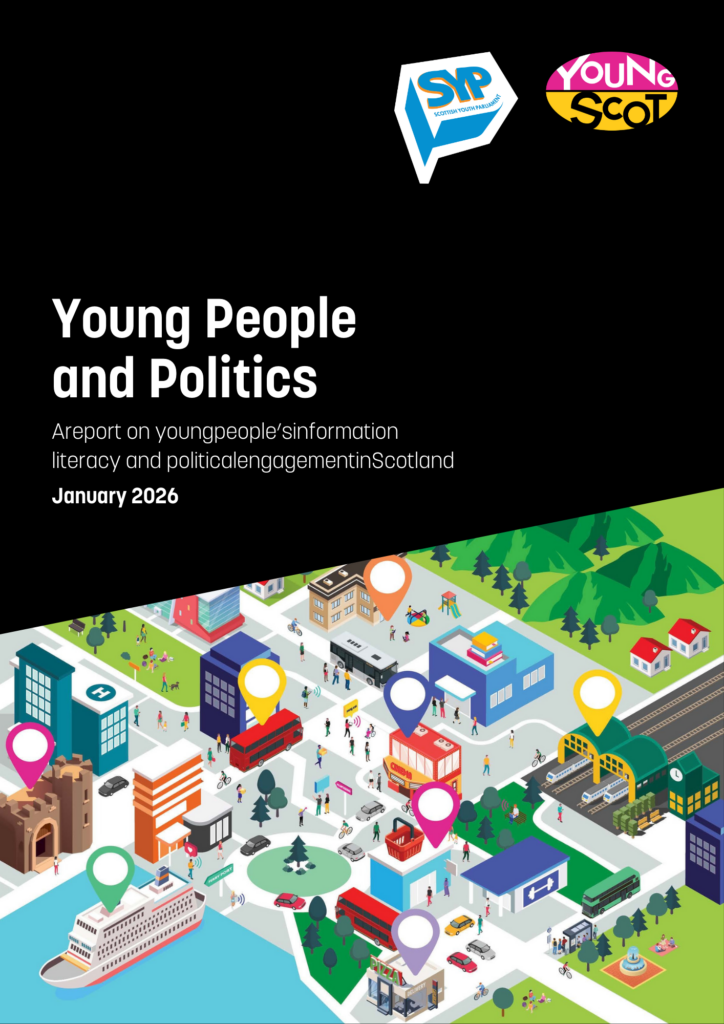
Our Young People and Politics Report, published in January 2026, highlights the barriers young people face to meaningful political participation amid growing concerns about online misinformation.
Three quarters of young people in Scotland told us politics affects their lives, but only two-fifths feel they can make any difference in local or national decisions. While the vast majority of young people (82%) agree it is important to be involved in politics, more than half (52%) don’t know how to get involved.
Growing online misinformation is making this disconnect even worse. While almost half of young people told us they use social media every day to find out what is happening in the world, 59% feel it is hard to know what is true or fake online when it comes to politics. Digital misinformation and distrust of online information is a major barrier, with more than half (60%) of young people saying that while they know how to find information, there were serious concerns about the reliability of online sources – with the same proportion (59%) stating that it is hard to know what is true or fake online.
The emotional toll of misinformation is significant. Young people reported feeling annoyed and anxious when encountering fake or misleading information. As one young person explained:
It’s frustrating to constantly wonder if something is manipulated or untrue. You have to be suspicious of practically everything.
The Young People and Politics report outlines recommendations which aim to address the challenges young people identified through our research, to strengthen young people’s ability to meaningfully participate in democratic processes, and to ensure young people can confidently access information they can trust.
On the publication of this report, Ellie Craig MSYP, Chair of the Scottish Youth Parliament, said:
“This report shows young people want opportunities to be meaningfully involved in decision-making. We want decision makers we can trust and we want to know where we can access reliable information to help us make informed decisions. Ahead of the next Scottish Parliament elections in May, and all future elections, it is essential that action is taken to make sure all young people are supported to meaningfully participate in democratic processes and that young people’s views are listened to and taken seriously.”